
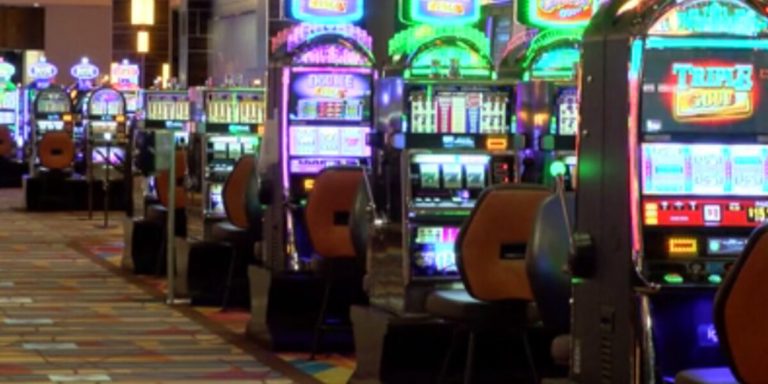
Each spin of a digital slot, every hand of a virtual blackjack hand, and every roulette spin in an online casino hinges on a technology that many players never see: the Random Number Generator https://slotsdjkasino.no/. For Norwegian players who progressively seek out international online casinos, grasping how these systems operate is a practical step toward making well-informed decisions. We compiled this guide to answer the most frequent questions in simple language, without technical jargon. We’ll explain the contrast between true random and pseudo-random algorithms, the role of independent audits, and the entire scope of fairness mechanisms. If you play for entertainment or you’re seeking a reliable platform like Slotsdj Casino, understanding the mechanics of RNGs turns a blind leap of faith into a open, checkable activity. We’ll examine how randomness is generated, why it matters, and how you can confirm that a casino’s games are truly fair. A real RNG is the backbone of digital trust, and we want you to feel confident every time you log on.
How RNG systems Power Online Casino Games
When you click the spin button on an online slot, the machine doesn’t just select a random reel position from a small set. It relies on the RNG to get a huge random number, often in the billions, which is then mapped to a specific combination of symbols. The same principle goes for digital table games: a virtual deck of cards is shuffled by attributing a random number to each card and then arranging them, or by utilizing the RNG to select cards one by one without replacement. The RNG normally functions in a continuous loop, creating random values far faster than any human could click, and the exact number used is determined by the precise microsecond you trigger the game. This renders predicting the outcome effectively impossible. Live casino games, like those shown from a studio with a real dealer, don’t rely on an RNG for the core mechanics because physical cards, wheels, or dice are used. However, even live lobbies might use RNG elements for bonus features or side bets. For Norwegian players who enjoy digital casino entertainment, this technology guarantees that every round is independent and unbiased.
What Is a Random Number Generator?
A Random Number Generator, frequently abbreviated as RNG, is a mathematical algorithm or physical device that generates a stream of numbers that cannot be reasonably predicted better than by random chance. In the context of online casinos, the term almost always refers to a software-based pseudo-random number generator, because true hardware-based generators are uncommon in commercial gambling platforms. The primary job of an RNG is to determine game outcomes: the symbols that land on a slot reel, the cards dealt in a hand of video poker, or the winning number in a digital roulette wheel. What makes an RNG suitable for gambling is not that it reaches mathematical perfection at the level of pure physics, but that its output meets rigorous statistical tests for uniformity and unpredictability. An RNG does not retain whether the last spin was a win or a loss; each new outcome is generated independently. We emphasize this point because many players erroneously believe that a machine is “due” for a payout. Realizing that every result is a fresh event is the first step toward sensible play.
Independent Auditing Organisations Worth Trusting
When evaluating an online casino, recognising which auditing institutions to seek out can have a major impact. Some of the most trusted names in the industry encompass eCOGRA, a London-based testing agency that concentrates on player protection and fair gaming; iTech Labs, an Australian company with ISO 17025 accreditation that tests random number generators for markets across Europe and Asia; and Gaming Laboratories International, GLI, which offers certification services in over 480 jurisdictions worldwide. These organisations adhere to strict protocols: they inspect the RNG algorithm, verify for statistical randomness, and appraise the game maths. Their approval seals are not given lightly and demand continuous compliance. For Norwegian players, seeing one of these logos on a casino’s homepage is a clear indicator that the operator prioritises fairness. behind the scenes Be aware that some less scrupulous sites present fake certificates, so we invariably recommend clicking on the seal to confirm that it links to a genuine certificate hosted on the auditor’s website. At Slotsdj Casino, the certificates are clickable and connect straight to the official reports from the corresponding laboratory. We make it easy by placing the certifications prominently, so you never have to search through multiple pages.
True Random Generators Versus PRNGs
A physical random source, or TRNG, harvests entropy from natural phenomena that are naturally chaotic, such as electrical noise, nuclear decay, or even the behavior of a lava lamp. These physical devices are random by nature and do not depend on a mathematical seed. In contrast, a algorithmic random generator, or PRNG, is a deterministic program that accepts an initial value called a seed and passes it through a mathematical function to create a sequence that appears random but is entirely reproducible if the seed is known. In test settings, TRNGs can be valuable for cryptographic applications where absolute unpredictability is vital, but for gambling games, a correctly configured PRNG is sufficient. The key is that the sequence must be sufficiently long and the algorithm robust enough that no player can identify patterns, even when analyzing millions of outcomes. When we develop games at Slotsdj Casino, we depend on approved PRNG systems because they provide strong randomness with the performance needed for smooth gameplay.
The most common PRNG algorithms employed in the casino sector, such as the Mersenne Twister or cryptographically secure variants, have enormous period lengths (the number of values they create before the stream repeats) often surpassing 2^19937 numbers. This indicates that even if a casino operated a game constantly for millions of years, the RNG would not return to its beginning during the existence of the platform. PRNGs can be tested far more efficiently than physical systems because testers can replicate test sequences by employing the same seed under regulated settings. Gamblers from en.wikipedia.org Norway can be assured knowing that governing organisations like the Malta Gaming Authority or the UK Gambling Commission demand the RNG to meet stringent statistical tests, including the Diehard or NIST suites, before a game can be authorised. These tests examine even distribution, absence of serial correlation, and randomness. While a TRNG might appear theoretically superior, a certified PRNG is the industry standard precisely because it can offer verifiable, auditable fairness without sacrificing performance.
Widespread Myths About Casino RNGs
In spite of the widespread use of RNGs, a striking number of misconceptions persist among gamblers. Some of these myths are benign, but others can result in poor betting choices or needless distrust. We want to clarify the most frequent misunderstandings so you can approach your favorite games with a sound mind. Below are a few myths we come across regularly in player forums and customer queries.

- Myth: A slot machine that has not given winnings in a while is due for a win. Reality: Each spin is independent; the RNG has no awareness of previous outcomes.
- Myth: Casinos can toggle a switch to reduce payouts on a game remotely. Reality: Certified RNGs cannot be changed without re-certification, and any alterations would be detected during audits.
- Myth: You can outsmart the RNG by analyzing patterns. Reality: A well-designed RNG does not generate exploitable patterns; any noticed streak is simply variance.
- Myth: Live dealer games are totally fairer than RNG games. Reality: While live games use physical randomness, RNG games are equally fair when they are properly tested and certified.
The Importance of Seeds and Entropy
Beneath every pseudo-random number generator lies a seed, an initial value that initializes the algorithm. Were an attacker or player to guess or reverse-engineer the seed, the complete sequence of random numbers would become predictable, undermining the fairness of all game. To prevent this, online casinos accumulate entropy from a broad range of unpredictable sources prior to generating the seed. These sources may include the accurate timing of hardware interrupts, fluctuation in network packets, disk access times, and even mouse movements carried out by administrators. The seed is then run through a secure hashing function to produce a starting state that is hard to reconstruct. In regulated environments, the entropy accumulation process undergoes auditing to ensure that no one source can be altered. At Slotsdj Casino, the RNG system used by our game providers does not rely on a fixed seed, and periodic reseeding takes place throughout the day to sustain a high entropy state. For Norwegian players, this implies that even if someone knew the exact algorithm, they would remain unable to forecast the next spin without gaining access to the constantly changing seed inputs.
Why Fairness Testing Matters for Norwegian Players
In Norway, the gambling market is tightly regulated by the Norwegian Gaming Authority, which oversees the state-owned Norsk Tipping and Norsk Rikstoto. That said, many Norwegian residents also choose to play at international online casinos that function under licences from jurisdictions including Malta or Curacao. Since these platforms are not subject to Norwegian oversight, the responsibility for verifying game fairness transfers to the player. This is where independent RNG testing grows to be indispensable. Reputable casinos voluntarily submit their games to accredited testing laboratories that run millions of simulated rounds and examine the output for deviations from true randomness. For a Norwegian player, a certificate from a known testing house is the sole most reliable indicator that the games are not rigged. Without such testing, there is no objective way to determine whether a casino is programming higher payout frequencies at certain times or manipulating results. We maintain that fairness is not a marketing slogan but a measurable attribute, and independent audits are the only way to verify it.
Independent testing goes far beyond a quick check of a few spins. Auditors scrutinize the source code of the RNG, verify the entropy gathering process, and conduct the well-known Diehard and NIST statistical test suites, which look for patterns, biases, and correlations that could be exploited. They also assess the return to player percentage of each game over hundreds of millions of rounds, guaranteeing that the actual RTP matches the theoretical value. For slot games, this encompasses confirming that the advertised payout rate, such as 96 percent, is maintained over the long run. These audits are commonly conducted annually, and some labs perform ongoing monitoring. At Slotsdj Casino, we partner exclusively with game providers whose RNGs have been certified by internationally recognised bodies including iTech Labs and eCOGRA, and we present the corresponding seals in the footer of our website. For a Norwegian player, devoting a moment to scroll down and click on these certificates provides immediate peace of mind. The reports are detailed and include the precise test dates and methodologies, so you can view exactly what has been verified.

Leave A Comment